
 connielukey
a Scottish Canadian returns to his childhood home to conquer a 900-year-old race.
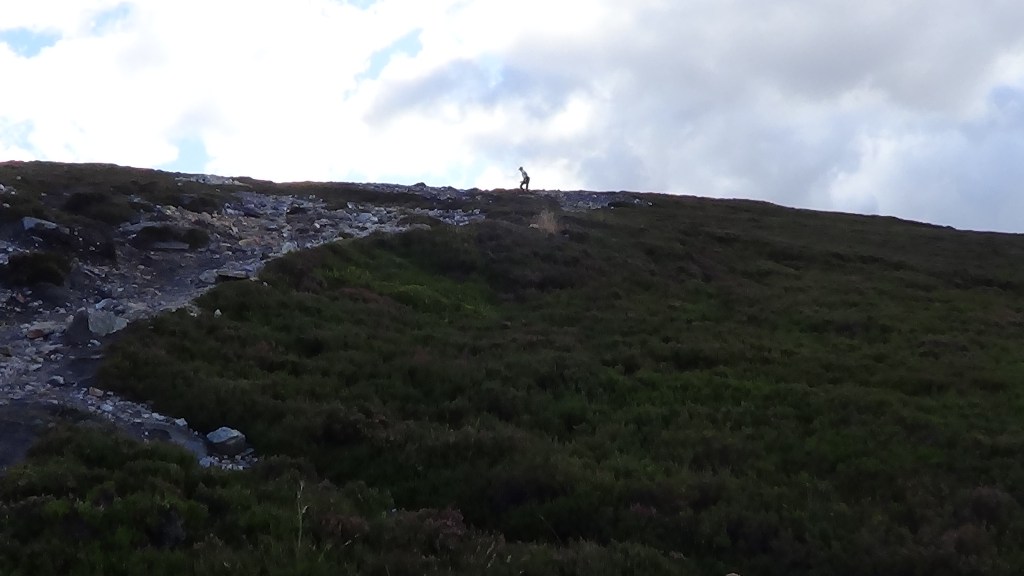
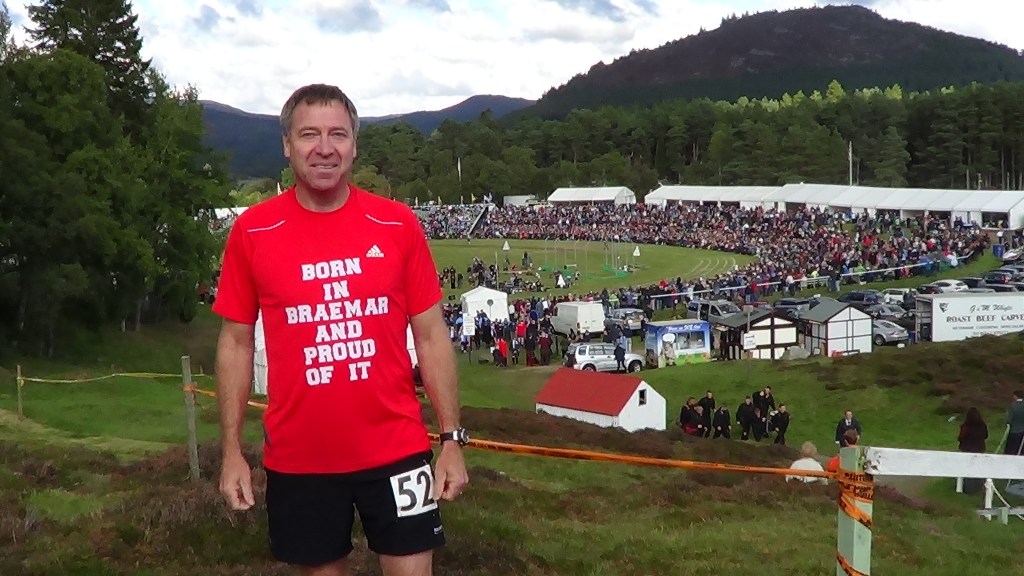
In January 2013, Keith Anderson committed himself to achieving his decade-long dream of competing in the hill race at Scotland’s world famous Braemar Gathering. A native of this little Scottish town, Anderson immigrated in 1967, settling in southern Ontario.
The Braemar Gathering, arguably Scotland’s biggest and best highland games, has taken place on the first Saturday in September for over 900 years. A crowd of about 15,000 spectators, including King Charles, regularly attend. Events test the strength and skill of each competitor and the gruelling 5.3 K run up Mount Morrone is the marquee event. Runners are given 45 minutes to reach the summit and return to the games park 859 m below.
It was more than just an ocean that separated Anderson from his goal. The 54-year-old Brantford, Ontario resident was out of shape and living in a pancake-flat neighbourhood. He was unsure how to train for a hill race. Initially, he focused on getting fit by alternating between 5K runs and 15K bike rides, gradually increasing those distances. By April he’d dropped 10 lbs. and was ready to take it up a notch. He began practicing uphill on the Tew’s Falls portion of the Bruce Trail near Dundas, Ontario and targeted training in the rain to prepare for Scottish weather.
By the time Anderson boarded the plane he’d lost 18 lbs. and could complete a 10K in 45 minutes.
Arriving a week early to acclimatize, his first trial run took 46 minutes. A third of the way up, he was exhausted and walked to the summit. Two days later, he returned to the base of the hill and tackled the ascent at a fast pace. When he looked at his watch after roaring back down, he’d finished in exactly 45:00. There would be no room for error on race day.
As Anderson stood on the start line, he marvelled at the unusually bright and sunny morning. The starter’s pistol sounded and he jostled his way to the front of the pack as they completed their obligatory lap of the park before attempting the hill. As they fanned out across a field on their way to Mount Morrone, the seasoned Scottish hill runners quickly passed him.
There are two ways to reach Morrone, the regular footpath he’d taken in the trial runs, and an open field to the left. On impulse, he followed the front runners left. Three steps later, his feet sank deep into a bog. “It took all my energy just to lift my legs,” says Anderson. He floundered until reaching the deer gate where the steep ascent begins.
Exhausted and still climbing after 20 minutes, he saw the leaders coming down the mountain on his left. The winds were so strong that he had to crawl on all fours just to not blow over and roll back down the mountain. It was then that he looked down and saw the panoramic view of the village of his birth. A voice broke his trance-like state. “Good effort,” a race marshal said, leaning down to slip a rubber band on Anderson’s wrist, symbolizing that he’d made it to the summit. Anderson stood up and headed back down.
There’s no trail down the mountain. Runners must leap and bound their way through the thick purple heather. Anderson found new life in his legs, picking up his pace and passing several runners, feeding off the exhilaration of the chase.
A third of the way down, his carefree descent got to him and he slipped on a boggy patch and fell face down into the mud. He shot to his feet and, without wiping off the muck, found his rhythm once again.
As the terrain levelled off, he couldn’t hear the crowd at the finish line. “There was no one else in sight and I thought, “I didn’t make it in time,’” says Anderson. He decided to keep pushing anyway. When the deer gate appeared in view he could hear the sound of bagpipes, then cheers drifted through the forest, lifting his spirits. Anderson began to wildly sprint across the last open field and back onto the track for the final lap. He looked up, hoping to see a finish line, but in the straightaway there was no clear end, so Anderson ran as hard as he could towards two kilted men with stopwatches. As he reached them, he took his last steps and collapsed on the track at their feet.
65 runners entered the race, 54 of them completed it. With a time of 44:55, Keith Anderson was the last to cross the finish line. Coming in last place never felt so good.
 Connie Lukey